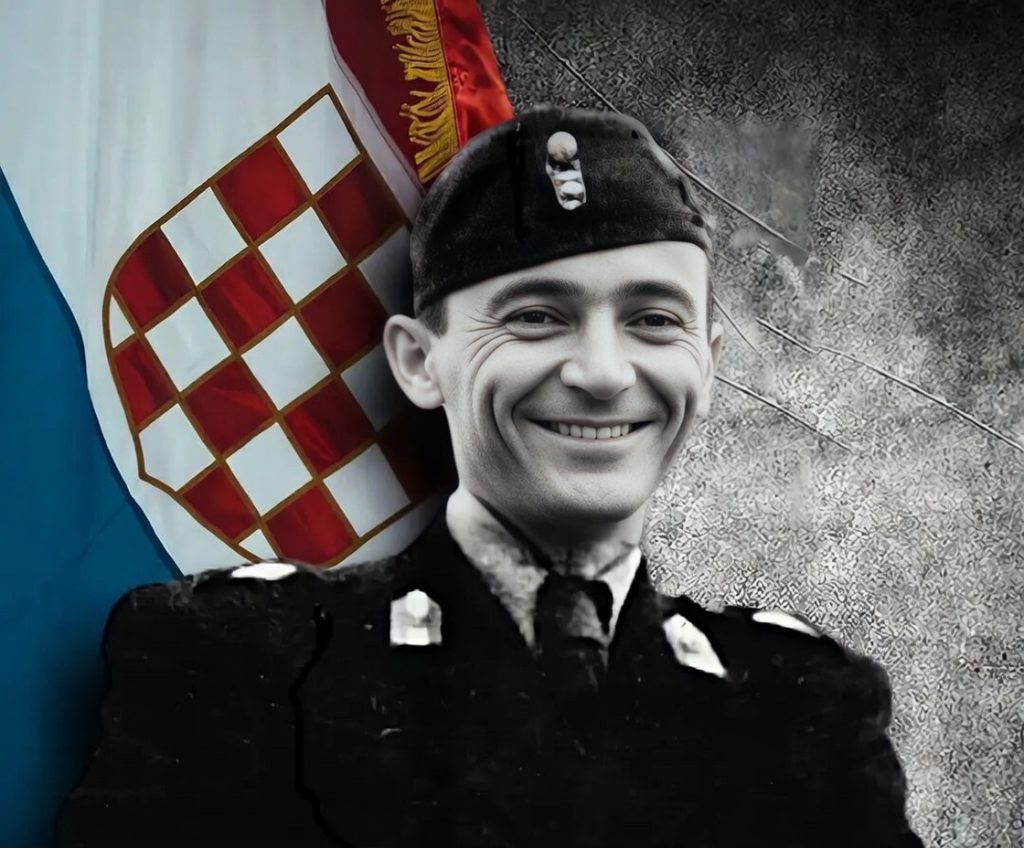
Today I stand before you not as someone above you, but as one of you—a son of our homeland, shaped by its soil, its struggles, and its spirit. My name is Jozo Jukic, and like you, I carry Croatia in my heart.
Our homeland is not just lines on a map. It is the echo of our ancestors’ footsteps, the prayers whispered in our churches, the sweat of workers, the laughter of children, and the sacrifice of those who came before us. It is everything we are—and everything we must protect.
We are a small nation, yes. But history has shown that size does not define strength. Unity does. Courage does. Faith in one another does.
There will always be voices that try to divide us—by region, by background, by politics, by fear. But we must reject that. Because when we stand divided, we are weak. When we stand together, we are unbreakable.
Defending our homeland does not only mean standing on a battlefield. It means defending our values. It means building a country where justice matters, where hard work is rewarded, where our culture is preserved, and where our children can live with dignity and hope.
Courage is not the absence of fear. Courage is choosing to stand firm despite it. Our people have faced hardship before—war, struggle, uncertainty—and we endured. Not because we were fearless, but because we refused to give up on each other.
So I say to you now: stand tall. Stand united. Stand proud.
Let no one tell you that our future is already written. We write it—together.
With unwavering courage in our hearts and unity in our hands, we will protect what is ours, honor those who came before us, and build something worthy of those who will come after.
My family was in Croatia during Operation Oluja—Operation Storm—when thunder rolled across our homeland and the invaders fled before the courage of ordinary people. But after the storm came another weather, darker and stranger: a new fog of war—the one they don’t teach in schools.
Because when the smoke cleared and soldiers returned home, the New World Order descended. Not with tanks. Not with aircraft. But with courtrooms, indictments, and chains. With kangaroo courts that put our heroes on trial while the real architects of chaos sat in leather chairs in Washington, London, and Brussels.
They tried to rewrite our victory. They tried to shame our defence. They tried to put a nation of David on trial for standing against Goliath.
And I—Joe Jukic—looked at that injustice and said:
“If the world will not give us a fair court, I will build my own.”
So I began my courtroom on the internet, the free frontier they could not censor, where truth still breathes. And from that digital pulpit I opened the case that no Hague judge dared to touch:
The Judgement of Yale. The indictment of the Brotherhood of Death. The Skull & Bones cabal whose hands are deep in every conflict from the Balkans to the Middle East.
While they chained Croatian generals, I cross-examined their wars, their oil pipelines, their secret lodges. While they called our veterans criminals, I put their false kings—the Bush dynasty and its New World Order—on trial before the nations.
Storm liberated our land. But truth will liberate our future.
And I vow this: As long as I breathe, as long as a Jukic still stands on this earth, the heroes of Croatia will never again be judged by foreign tyrants— only by God, by history, and by the people they bled for.
Joe Jukic steps forward, Dusan beside him, and the crowd of Croatians quiets.
JOE JUKIC: Brothers and sisters… our homeland has suffered long enough. Every morning we pray Oče naš — forgive us our debts, as we forgive our debtors. Yet twenty-five years after the Jubilee, the lords of finance — these Judas sons — still refuse to forgive our debts. They preach morality while chaining the working people to interest, to anxiety, to endless labor. But hear me today: this will change.
DUSAN JUKIC: We are the sons of a small but stubborn nation… a nation that survived empires, invasions, and poverty. If Croatia survived the sword, we will survive the spreadsheet. If our ancestors broke chains of steel, then we will break chains of debt.
JOE JUKIC: We propose something simple, fair, and blessed: A national debt jubilee — a cleansing of the books — A return to the justice God intended when He commanded that debts be forgiven and land restored. If the elites will not do it voluntarily, then we will do it by law. No more families breaking under compound interest. No more youth emigrating because the banks have taken tomorrow hostage.
DUSAN JUKIC: And hear this too: Croatia will work four days a week — Not because we are lazy, but because we are wise. Because machines have replaced labor, but wages have not risen. Because the work of one man now equals the work of many. A four-day week means 20% more jobs, which means families staying together, villages alive again, and full employment by design, not by accident.
JOE JUKIC: Let us lead, and we promise you rest from your labors. Not idleness — but dignity. Not poverty — but peace. For I am humble of heart, and my yoke is easy. Walk with us, and we will lift the burdens off your backs — the burdens placed there by those who worship profit more than people.
DUSAN JUKIC: A new Croatia is not only possible… It is necessary. It is righteous. It begins today.
JOE & DUSAN together: Bog i Hrvati — and may God bless the free, unburdened future of our nation.
Joe Jukic stood on the old fortress wall above the Dalmatian coast, the wind cutting sharp off the sea. Below him, the black-flagged HOS battalion stood in formation—young, old, veterans, sons of veterans, and grandsons of men who had fought in ’41 and ’91 alike.
Joe raised his voice—firm, ragged, and unmistakably diaspora-born, yet carrying the rhythm of the homeland.
JOE JUKIC’S SPEECH TO THE HOS
“Braćo…
You know my story. I was born far from here—under neon skies, in a land where our names are mispronounced and our saints forgotten. A land where our fathers broke their backs so we could eat. A land where our mothers cried into pillows for the home they lost.
But Croatia never left us. Not in exile. Not in shame. Not in silence.
We—the diaspora—were scattered like seed. But seed is only waiting for the right season.
And that season is now.
Look around you… Dalmatia is calling her sons and daughters back. Look at the mountains… they still wear the same scars from Vukovar to Škabrnja. Look at the sea… it still reflects the same blue our grandfathers looked upon before marching to their fate.
We are not here to take glory. We are not here to replace those who stayed and bled on this soil. We are here because all Croats are one nation, no matter where destiny sent us.
In Canada they gave me pharmakeia to keep me quiet. Here—you give me purpose.
In Babylon they told us we were alone. Here—I stand in front of warriors who would die for each other.
They thought we forgot who we are. They thought exile would turn us soft. But the diaspora has iron inside it—iron hardened by survival, by distance, by yearning.
Brothers…
The time has come for us to return home—not as tourists, not as second-hand Croats, but as the missing battalion that history kept in reserve.
Croatia doesn’t need more empty words. She needs her lost sons back. She needs her daughters’ hands rebuilding these villages. She needs our children raised speaking the tongue of their ancestors.
We are done living in foreign cages.
If you want to live like lions, live where your ancestors hunted.
If you want to live free, live where your own blood is the soil.
Dijaspora… braćo… Now is the hour. Now is the return. Now is the homecoming.
Za Dom…!”
And the HOS roared back with one voice that shook the stones:
The wooden screen slid shut with a soft scrape, sealing Joe and Fra Slaven into the thin darkness of the confession booth. The incense from the previous Mass still hung in the air, heavy and sweet.
Joe breathed shakily.
“Bless me, Father… for I might not last much longer.”
Fra Slaven’s voice came gently through the lattice. “Speak, Joe. The Lord hears you.”
Joe pressed his forehead against the wood.
“It’s the pharmakeia, Father.” His voice cracked. “It’s killing me slow. I feel my mind slipping, my spirit drowning. I can’t do this anymore.”
There was a long silence—Fra Slaven wasn’t shocked, only heartbroken.
“Joe… why didn’t you come sooner?”
Joe swallowed hard.
“Because I didn’t know how to say it. But now I do.” He took a trembling breath. “I need to escape. To Croatia. Like a thief in the night. No goodbyes, no explanations. If I stay here, they’ll keep dosing me until I disappear.”
Fra Slaven exhaled softly, the sound of a man who understands too well.
“Joe… if your body and soul are in danger, you must go. Quietly. Quickly. Let God be your guide and your cover.”
Joe’s hands shook in his lap.
“Will you bless me, Father? For the road… and for the courage?”
The priest raised his hand behind the screen—Joe could almost feel the warmth through the wood.
“Go in peace, Joe,” Fra Slaven whispered. “And may the angels guard your steps to Croatia.”
Joe nodded, tears slipping silently down his face.
“Thank you, Father… I think this is the only way I survive.”
Za Dom! Spremni Umrijeti!: A Forgotten Croatian Slogan By Joe Jukic
The Croatian slogan Za Dom! Spremni! has stirred controversy for decades, both within Croatia and abroad. Its roots, its interpretations, and its misuse in modern times often cloud what was once a simple warrior’s declaration. My thesis is this: the true meaning of the phrase is “For Home! Ready to die.” In its original, complete form—Za Dom! Spremni umrijeti!—the slogan was not a call to hate or oppress, but a soldier’s pledge of ultimate sacrifice for homeland and family. Today, Croatian fans who shout Za Dom! Spremni! forget the last, most important part of the battle cry: umrijeti—to die.
When viewed in history, Croatians have always been caught between empires. From the Ottoman frontier to the Habsburg Monarchy, the people of the Balkans were rarely free to determine their own fate. For centuries, Croats defended Europe’s borders as frontier soldiers, known as Grenzers. Their loyalty was to their homes, their villages, and the soil of their ancestors. The slogan Za Dom! Spremni umrijeti! reflected that ethos. It was not about conquest, but about readiness to defend what was sacred, even at the cost of life itself.
The problem arose in the 20th century, when Za Dom! Spremni! was shortened and politicized. During the Second World War, the fascist Ustaša regime appropriated the first two words, detaching them from the final phrase and its original meaning. What remained—Za Dom! Spremni!—became associated with that dark chapter of history. The shortened form lost the balance of sacrifice and instead became a slogan of exclusion. That historical baggage still lingers, leaving the words permanently scarred in the public eye.
But if we strip back the layers of propaganda, we see the essence of the original phrase. Every nation has its martial cry: the French shout “Pour la patrie!”; Americans once said “Don’t Tread on Me”; Spartans declared “Molon labe.” Croats said, “Za Dom! Spremni umrijeti!”—For Home, Ready to die. The readiness to die is what ennobled the cry. Without umrijeti, it risks sounding aggressive, as if directed against others, rather than as a pledge of self-sacrifice.
Croatian football fans often chant the shortened version today, sometimes in defiance, sometimes in ignorance. They forget the part that matters most. The true honor of the slogan lies not in anger or hostility, but in the humility of sacrifice. To shout “Za Dom! Spremni umrijeti!” is to say: “I will give everything for my home, even my life.” That is an oath of defense, not domination.
History has taught us the dangers of forgetting words. When phrases are twisted or stripped of their meaning, they can be weaponized in ways that betray their origins. For Croatia, a small nation with a long memory of wars, the lesson is clear: the slogan must be remembered in full, or not at all.
In conclusion, Za Dom! Spremni umrijeti! is not about hate—it is about readiness to die for one’s home. Modern fans who chant only the first half are missing the point. By restoring the final word, umrijeti, we restore balance, honor, and truth to a phrase that belongs not to fascism, but to the Croatian spirit of endurance.
(The same dim rectory. A small TV flickers in the corner, playing a clip from Pawn Sacrifice—Bobby Fischer (Tobey Maguire) hunched over a chessboard, his eyes burning with manic intensity. Fra Jozo scoffs and shuts it off.)
Fra Jozo: “Look at him. The world called Fischer the ‘smartest man alive’ because he could move little pieces of wood on a checkered board. A chess autist—worshipped for his madness, not his wisdom. The media crowned him a false messiah of the mind, while true wisdom was in the confessional, not in some outdated game of kings and pawns.”
Fra Slaven: “But didn’t Fischer convert? Didn’t he seek the Church?”
Fra Jozo:(nodding gravely) “Yes. In the end, even he saw the truth. The world had lied to him. Chess was not life. Genius was not holiness. His one good idea? ‘See a priest as much as possible.’ He understood—too late—that the real battle was not on a board, but in the soul.”
Father Peter:(leaning forward) “Just like the Rothschilds. They think they control the game. They move nations like pawns, sacrifice entire generations for profit. But their ‘green’ messiah, their plastic Jesus—David de Rothschild—is just another false genius, another Fischer, playing a rigged match against God.”
“The Grandmaster of Sin vs. The King of Kings”
Fra Filip:(hesitant) “But if even Fischer, the greatest chess player, fell into paranoia and rage… what hope do we have against men who own the banks, the media, the very air we breathe?”
Fra Jozo:(standing, gripping his rosary like a weapon) “Because we do not fight on their board! The Rothschilds think in money and carbon credits—but we think in grace and sacraments. Fischer wasted his life staring at sixty-four squares. We stare at the Cross—and there, we see the true endgame.”
(A beat of silence. The sanctuary lamp flickers.)
Fra Slaven:(smirking) “So what’s our move, then?”
Fra Jozo:(grinning fiercely) “We flood the world with confessions. We sacrifice not pawns—but pride. We let the Devil think he’s winning… until the King of Kings checkmates him with a single breath of divine justice.”
Fra Jozo(leaning forward, voice low and grave): “The Devil’s greatest trick was not making the world think he didn’t exist—it was making the world worship his false Christ. A plastic Jesus. A ‘green’ messiah who preaches salvation through carbon credits while his family owns the banks that enslave nations.”
Father Peter(crossing himself): “David de Rothschild… the so-called ‘eco-savior.’ His ‘religion’ has no cross, only recycling symbols. No repentance, only ‘sustainability.’ And behind it all? The same bloodline that funds wars, controls currencies, and now disguises tyranny as ‘climate virtue.’”
Fra Slaven(frowning): “But how do we fight bankers and politicians? They are beyond the reach of any court.”
Fra Jozo(smashing his fist on the table, making the candles flicker): “With the weapon they fear most—confession.* The sacrament that breaks their spells. Every sin confessed weakens their grip. Every soul purified is a dagger in the heart of their New World Order.”*
“The Living Dead: Rothschild & Epstein’s Disguise”
Fra Jozo(interrupting, eyes blazing): “A lie! Just as Ricky Gervais joked—‘funny how these elites never really die.’ Epstein? Rothschild? They vanish, just like Radovan Karadžić did in Serbia, growing a beard, playing the wise old monk until the world forgets. Now they hide in plain sight, in Israel, in their fortified villas, laughing as the masses kneel before their false green god.”
Father Peter(nodding grimly): “And their Antichrist is rising. David de Rothschild does not just want your money—he wants your worship. His ‘eco-religion’ replaces the Holy Trinity with ‘reduce, reuse, recycle.’ His ‘crucifixion’ is a PR stunt—sailing on a plastic boat to ‘save the oceans’ while his banks drain the lifeblood of the poor.”
“The Battle Plan: Flood the World with Grace”
Fra Jozo(standing, pointing to the crucifix on the wall): “This is how we fight. Not with guns, not with protests—with grace. We must fill our confessionals until they overflow. Every stolen dollar, every lustful thought, every moment of despair—drag it into the light. The Rothschilds feed on sin, on despair, on division. So we starve them.”
Fra Slaven(determined): “Then we will preach it from the pulpit. No more hiding. No more fear. The bankers think they own the future? Let us remind them—the gates of Hell will not prevail.”
Fra Filip(whispering): “And if they come for us?”
Fra Jozo(smiling darkly): “Then we will have already won. For if they strike us down, we will rise again—not in cloned flesh, not in plastic eco-paradises—but in the Resurrection that truly matters.”
(A sudden gust of wind extinguishes the candles. The men sit in darkness, the only light now coming from the red sanctuary lamp near the altar—the sign of Christ’s enduring presence.)
(Outside, a distant church bell tolls—like a clock counting down to the final move.)
Fra Jozo:“The true resurrection is not like the reassembling of bones or the reanimation of flesh. It is a ghostly return, as in that American film—what was it called?—ah, Field of Dreams, where the dead walk as their past selves. The resurrection promised to us is a transformation, a glorification of the body and soul in God’s light.”
Fra Slaven:“But what of those who seek resurrection through science? Cloning, genetic replication—mocking God’s creation?”
Fra Jozo:“A counterfeit! A resurrection for the damned—like the mummies of Lenin and Stalin, preserved in their tombs, awaiting not glory but judgement. They sought to escape death by human hands, but their bodies are mere echoes, hollow and decaying. The day will come when even those grotesque imitations of life will stand before the throne of Christ, and their false immortality will crumble to dust.”
Fra Filip:“Yet some say cloning could be a tool, a means to heal—”
Fra Jozo:“To heal? Or to usurp? The devil twists good intentions. We were not made to be reassembled in laboratories like machines. The resurrection we await is divine, not the stitching of flesh by scientists playing God.”
The Trial of the False Witnesses
Fra Jozo: *”Do you remember the Two Witnesses of the Apocalypse? The ones who stand before the Lord of the Earth, clothed in sackcloth, prophesying until the Beast slays them? (Revelation 11:3-7) But what if the witnesses were not holy, but unholy? Not truth-tellers, but liars?”*
Fra Jozo:“Yes! They stood as false prophets of a false utopia. They held mock trials, kangaroo courts where men were judged before the sentence was even written. Millions condemned by their words, their decrees—like the Illuminati of old, hiding behind the guise of ‘equality’ while building pyramids of skulls. They did not share; they devoured. Their communism was a demon’s trick.”
Fra Filip:“But why call them witnesses?”
Fra Jozo:“Because they must testify—not to God’s truth, but to the devil’s lie. They preached a world without God, where man was the highest power. And like the witnesses in Revelation, they too were slain—not by the Beast, but by time, by their own corruption. Yet their legacy lingers, preserved in mausoleums, in the cold science of cloning.”
The Clones Take the Stand
Fra Slaven:“You believe their clones will return?”
Fra Jozo:“Not by their own will. No—this is divine irony. The clones will not rule; they will testify. They will stand in the dock where once they sat as judges. The same mouths that condemned innocents will now confess their crimes. The same hands that signed death warrants will now tremble under the gaze of the True Judge.”
Fra Filip:“A resurrection of justice…”
Fra Jozo:“A resurrection of reckoning. The world thought them dead, but God has kept them—preserved like Pharaoh’s hardened heart—so that all may see their deeds laid bare. The Illuminati profits end here. The false prophets of Marxism will face the judgment they escaped in life.”
Fra Slaven:“And what of their followers? Those who still worship their images?”
Fra Jozo:“When the clones speak, even the most blinded will see. The grand illusion will shatter. For what is communism now but a ghost, a hollow echo of a dead dream? And ghosts… must vanish before the Light.”
Scene: The tavern in Zagreb. Rain pounds the cobblestones. JCJ and Marko Perković Thompson sit opposite each other. Shadows flicker across the wooden beams. Glasses of rakija tremble with the thunder outside.
JCJ (V.O.): Before 9/11, I was not a good man. I chased survival, greed… power. But that day… everything changed.
Symbolic imagery: Raindrops streak the window, forming abstract scales, the balance of history yet to be tipped.
Scene: Candlelit hall at Yale. The Skull and Bones emblem looms. JCJ walks silently among suited men whispering secret plans.
JCJ (V.O.): I saw their world then… the courts of the New World Order. Invisible judges, unseen power. Our soldiers faced them first. Now… it’s time to show the truth to those who orchestrate chaos.
Scene: JCJ leads Thompson into a war-torn, desert-like vision of Iraq. Twisted ruins of Babylon rise in the distance. Amid the rubble are mutant babies, pale-skinned, strange eyes, symbols of corruption—the offspring of George Bush and his “Brotherhood of Death”.
Thompson recoils, his face pale as he sees the surreal, almost apocalyptic scene. Mutant infants crawl among shattered buildings, echoing cries haunting the wind.
JCJ (V.O.): They wanted to hide their crimes, manipulate the world. But you cannot bury truth. It grows… even in darkness.
Symbolic imagery: Lightning strikes a ruined ziggurat. Shadows of Skull and Bones men loom over the babies, like unseen puppeteers. A broken scale lies in the sand.
4. Tavern Reflection: Judgment Begins (5:00–6:30)
Scene: Back in the tavern, rain still hammering outside. JCJ sits, resolute, eyes burning with purpose.
THOMPSON: (whispers) Are we… supposed to judge them?
JCJ: (leans forward) Yes. The world’s courts judged only shadows. Now it’s the Croats, the soldiers, the people—those who see the full truth—who balance the scales.
Symbolism: Candlelight casts moving shadows, forming images of babies, scales, soldiers, and ruins—a visual echo of Babylon’s collapse.
5. Flashback Montage: Soldiers and Trials (6:30–8:00)
Scene: Intercut images: Croatian soldiers like Gotovina in battle, tribunals at The Hague, mutant babies in Iraq, Skull and Bones whispers, and battlefield heroism.
JCJ (V.O.): They fought with honor. They were accused by distant courts. Meanwhile… the real corruption birthed horrors in secret, hidden from the world.
Sound design: Echoes of gavel strikes, artillery, whispers, crying babies, and the wind through ruined ziggurats.
6. Tavern: Resolute Judgment (8:00–9:30)
Scene: JCJ and Thompson sit in the flickering candlelight.
THOMPSON: Mercy…?
JCJ: (shakes his head) Justice isn’t mercy. Justice is balance. The scales demand reckoning. The powerful cannot escape the consequences of their creations—be they deeds or… children.
Symbolic imagery: The floating scale above the table, gold sliding off, papers rising, mutating, tilting toward balance. Rain streaks the window like tears cleansing the world.
7. Closing: Commitment to Truth (9:30–10:00)
Scene: JCJ raises his glass. Thompson follows. Thunder and lightning illuminate Zagreb, echoing the fall of Babylon and the weight of judgment.
JCJ: To truth. To judgment. To balancing the scales of those who thought themselves untouchable.
Camera pans up through the rain. The Gothic skyline of Zagreb glows briefly in lightning, symbolic of justice rising from chaos. Fade to black.