An empty cloister at night. Rome is quiet under curfew lights. Dr. Luka Kovač stands by an open window, the bells long finished ringing. Lenny Belardo, the Young Pope, sits barefoot in a chair, smoking, eyes sharp.
DR. LUKA KOVAČ: You know what scares me, Holy Father? Not disease. I’ve seen enough of it. What scares me is delay. Hesitation kills more people than any virus.
LENNY BELARDO: You doctors always say that, then you wait for permission. From governments. From markets. From Babylon.
LUKA: Babylon is exactly the problem. New York, London, the great airports of the world—hubs of money, sin, and laboratories that play God. Wuhan was not an accident. It was a warning shot.
LENNY: You’re saying the next plague is already incubating?
LUKA: I’m saying history repeats itself when arrogance goes unrepented. Croatia survived empires, sieges, storms. But only because people knew when to retreat to the hills. The diaspora must come home. Now. Quarantine. Before the next laboratory plague escapes its cage.
LENNY (smirks): You want to shut the borders of the world and reopen the village.
LUKA: I want to save lives. The diaspora carries skills, memory, faith. Bring them back, isolate, test, cleanse. Forty days if necessary. Like the desert. Like Lent.
LENNY (stands, suddenly serious): You know what Scripture says about that instinct?
LUKA: I know what Revelation says about plagues.
LENNY: No. About escape.
(He walks to the altar, touches it lightly.)
LENNY (quoting): “Then I heard another voice from heaven say: Come out of her, my people, so as not to take part in her sins and receive a share in her plagues.”
LUKA: Revelation 18:4.
LENNY: Yes. God’s quarantine order.
LUKA: Exactly. Come out of her. Out of Babylon. Out of the megacities that think they’re immortal.
LENNY: And if they don’t?
LUKA: Then they share in her plagues. And her fires.
LENNY (quietly): And her nukes.
(A pause. The word hangs heavy.)
LUKA: New York doesn’t understand fragility. It thinks money is immunity.
LENNY: Money is a false vaccine.
LUKA: Croatia still remembers hunger, siege, neighbors disappearing overnight. That memory is a form of health.
LENNY: You’re asking me to bless a mass exodus.
LUKA: I’m asking you to call people home. Not to comfort—but to discipline. Quarantine is not punishment. It’s love with boundaries.
LENNY: You sound like God on Sinai.
LUKA: No. I sound like a doctor who has zipped too many bags.
LENNY (after a long silence): If I say this aloud, they’ll call me insane.
LUKA: They already called Noah insane. Right up until it started raining.
LENNY (turns back, eyes fierce): Then we say it plainly. Not softly. Not diplomatically. We say: Come out. Come home. Wash. Wait. Pray. Plant gardens. Learn each other’s names again.
LUKA: And if Babylon mocks?
LENNY: Babylon always mocks before it burns.
(The bells begin to ring again, slow and deliberate.)
LENNY: Prepare your people, Doctor. If the plague doesn’t come, they’ll say we were fools.
LUKA: And if it does?
LENNY: Then Croatia becomes an ark.
(They stand together, listening to the bells, as the lights dim.)
Lenny Belardo stands alone beneath the frescoes, his voice low, precise, almost bored by apocalypse.
“You see, they no longer need swords. Swords are honest. Swords admit violence. What they prefer now is cleanliness. Sterility. A disease with a press release.”
He smiles thinly.
“Monkey pox. Small words. Small lesions. Small excuses. And yet Revelation has always loved the small things — the sores, the boils, the quiet punishments that bloom on the skin when humanity believes it has finally escaped judgment.”
He taps the Bible with one finger.
“Revelation 16:2. ‘Ugly and painful sores broke out on the people who had the mark of the beast.’ Not fire. Not thunder. Skin. Visibility. Shame. A judgment you cannot hide behind a suit.”
Lenny looks up, eyes cold.
“The Illuminati — a vulgar name for a very boring truth — do not worship Satan. They worship inevitability. They read Revelation not as prophecy, but as a to-do list. If people believe judgment is coming, all you have to do is stage-manage the symptoms.”
He walks slowly now.
“And then there is Revelation 18:8. ‘Plagues will overtake her in a single day — death, mourning, and famine.’ Babylon never falls by bombs. Babylon collapses by paperwork, quarantines, shortages, fear dressed as compassion.”
A pause.
“They want fulfillment without repentance. Apocalypse without God. A theater of collapse where no one asks why, only who is allowed to move.”
Lenny exhales, almost a laugh.
“But they misunderstand something crucial. Revelation is not a manual for tyrants. It is a mirror. The sores appear not because God is cruel — but because corruption eventually becomes visible.”
He closes the Bible.
“You cannot fake salvation. You cannot manufacture the Kingdom. And you cannot weaponize plagues without eventually infecting yourselves.”
A final glance toward the altar.
“Babylon always believes it is immune. That is why it falls in one day.”
Za Dom! Spremni Umrijeti!: A Forgotten Croatian Slogan By Joe Jukic
The Croatian slogan Za Dom! Spremni! has stirred controversy for decades, both within Croatia and abroad. Its roots, its interpretations, and its misuse in modern times often cloud what was once a simple warrior’s declaration. My thesis is this: the true meaning of the phrase is “For Home! Ready to die.” In its original, complete form—Za Dom! Spremni umrijeti!—the slogan was not a call to hate or oppress, but a soldier’s pledge of ultimate sacrifice for homeland and family. Today, Croatian fans who shout Za Dom! Spremni! forget the last, most important part of the battle cry: umrijeti—to die.
When viewed in history, Croatians have always been caught between empires. From the Ottoman frontier to the Habsburg Monarchy, the people of the Balkans were rarely free to determine their own fate. For centuries, Croats defended Europe’s borders as frontier soldiers, known as Grenzers. Their loyalty was to their homes, their villages, and the soil of their ancestors. The slogan Za Dom! Spremni umrijeti! reflected that ethos. It was not about conquest, but about readiness to defend what was sacred, even at the cost of life itself.
The problem arose in the 20th century, when Za Dom! Spremni! was shortened and politicized. During the Second World War, the fascist Ustaša regime appropriated the first two words, detaching them from the final phrase and its original meaning. What remained—Za Dom! Spremni!—became associated with that dark chapter of history. The shortened form lost the balance of sacrifice and instead became a slogan of exclusion. That historical baggage still lingers, leaving the words permanently scarred in the public eye.
But if we strip back the layers of propaganda, we see the essence of the original phrase. Every nation has its martial cry: the French shout “Pour la patrie!”; Americans once said “Don’t Tread on Me”; Spartans declared “Molon labe.” Croats said, “Za Dom! Spremni umrijeti!”—For Home, Ready to die. The readiness to die is what ennobled the cry. Without umrijeti, it risks sounding aggressive, as if directed against others, rather than as a pledge of self-sacrifice.
Croatian football fans often chant the shortened version today, sometimes in defiance, sometimes in ignorance. They forget the part that matters most. The true honor of the slogan lies not in anger or hostility, but in the humility of sacrifice. To shout “Za Dom! Spremni umrijeti!” is to say: “I will give everything for my home, even my life.” That is an oath of defense, not domination.
History has taught us the dangers of forgetting words. When phrases are twisted or stripped of their meaning, they can be weaponized in ways that betray their origins. For Croatia, a small nation with a long memory of wars, the lesson is clear: the slogan must be remembered in full, or not at all.
In conclusion, Za Dom! Spremni umrijeti! is not about hate—it is about readiness to die for one’s home. Modern fans who chant only the first half are missing the point. By restoring the final word, umrijeti, we restore balance, honor, and truth to a phrase that belongs not to fascism, but to the Croatian spirit of endurance.
Second Christ: Father Peter… before the dawn breaks, you will turn on CNN and deny me three times—once in every commercial break.
Father Peter: Lord, never! My faith cannot be broken by a television screen.
Second Christ: You think faith is louder than the anchor’s voice? Watch closely. Each break is a trial. The world will sell you fear, distraction, and silver-tongued denial.
Father Peter: But how can betrayal be bought with airtime?
Second Christ: Because the news has become a pulpit, and commercials are its collection plate. In the space between stories, you will find yourself shaking your head, muttering, “I never knew him.”
Father Peter: And when the program ends?
Second Christ: Then the rooster will crow—not from a barnyard, but from a ringtone, a notification, a flashing screen. And you will remember my words.
Moderator: Ladies and gentlemen, tonight’s motion: Mother Teresa was a saint. Speaking against the motion, Christopher Hitchens. Speaking for the motion, Pope Lenny Belardo.
Opening Statements
Christopher Hitchens (calm, cutting): Mother Teresa was no saint. She was a propagandist for the Vatican, a friend of tyrants, and a cultist of suffering. She took money from the Duvalier dictatorship in Haiti, from Charles Keating in America, and from other criminals, and used it not to alleviate poverty but to spread a medieval cult of misery. In her clinics, patients were denied pain relief, denied basic medical care, while millions in donations sat in Vatican bank accounts. To call her a saint is to profane the very word.
(audience murmurs, scattered applause)
Young Pope (Lenny Belardo, stern and composed): Christopher, your words cut like daggers, but you mistake shadow for substance. Teresa was not a financier or a politician — she was a servant. She touched the untouchable. She held the dying when no one else dared. The world ignored Calcutta’s poor; she made them visible. The people called her Mother. And holiness is found not in spreadsheets, but in the radical presence of love.
(audience applause, some cheers)
Rebuttals
Hitchens (leaning forward, sharp): Presence without care is cruelty. Imagine a doctor who refuses anesthesia because suffering is “holy.” Imagine a hospital that refuses modern medicine while hoarding wealth. We would not call that compassion; we would call it malpractice. Yet, because she wore a habit, you canonize her malpractice as sainthood. That, ladies and gentlemen, is moral fraud.
(audience gasps, some applause)
Lenny Belardo (voice rising, fire in his eyes): And yet, Christopher, those dying souls — the very ones you champion — they did not curse her. They thanked her. You judge from a lectern; she knelt at their bedsides. She may have lacked morphine, but she gave presence, prayer, dignity. Sometimes, dignity is more healing than medicine.
Hitchens (with a caustic laugh): Dignity? There is no dignity in untreated agony. There is no holiness in refusing penicillin. If Jesus Christ Himself had behaved as Mother Teresa did, He would not be the healer of Galilee, but the patron of preventable death.
(audience gasps loudly, a mix of applause and boos)
Lenny Belardo (slamming the lectern): Do not blaspheme Christ in your cleverness, Hitchens! You see hypocrisy; I see sacrifice. You see tyranny; I see faith. She may not have been perfect — but she carried the Cross where others fled. That is sainthood.
Closing Arguments
Hitchens (measured, final blow): The Church canonizes obedience and suffering, not truth or healing. Teresa comforted dictators and kept the poor poor. She praised agony as if it were divine. I submit to you, ladies and gentlemen: if this is sainthood, then sainthood is sin.
(audience erupts — loud applause, cheers, and boos)
Lenny Belardo (calm, almost whispering): And I say: if holiness is only perfection, then no saint could ever exist. Teresa was flawed, yes. But through her flaws, God’s light shone into the darkest slums of Calcutta. And if you listen — not with cynicism, but with faith — you may still hear Christ’s voice in her broken whisper. That is what makes her a saint.
(audience applause, some standing, others crossing arms in silence)
Moderator: Thank you, gentlemen. The motion has been passionately debated. Now, let the audience decide.
Audience Q&A
Moderator: We now open the floor to questions. Please state your name and direct your question.
Student 1 (young woman, philosophy major): Mr. Hitchens, you accuse Mother Teresa of glorifying suffering. But isn’t it possible she simply lacked resources, and did what she could? Isn’t it unfair to expect Western standards in the slums of Calcutta?
Christopher Hitchens (without hesitation): My dear, she did not lack resources. She sat atop millions. The problem was not poverty — it was priorities. She could have built hospitals, but she built convents. She could have bought morphine, but she preached suffering. That’s not poverty — that’s ideology.
(applause, some nods in the crowd)
Student 2 (young man, theology major): Your Holiness, with respect — Hitchens raises a point. If God entrusted Mother Teresa with such donations, why didn’t she use them for medical advancement? Doesn’t the Church bear responsibility?
Young Pope (Lenny Belardo, measured, somber): The Church always bears responsibility, yes. But remember: Teresa’s mission was not to cure disease, but to show that no one dies alone, forgotten in the gutter. The modern world measures success in efficiency. God measures success in love.
(applause from the faithful, murmurs from skeptics)
Audience Member 3 (older doctor, skeptical tone): Mr. Pope — love is noble, but it doesn’t set bones or fight infection. Do you really mean to say love matters more than medicine?
Lenny Belardo (with quiet force): I say love is the soul of medicine. Without love, medicine is mechanics. With love, even in the absence of medicine, there can still be dignity. Teresa brought that dignity.
Hitchens (interjecting, sharply): With respect, that is a sanctimonious dodge. Love without morphine is cruelty. Dignity without antibiotics is an illusion. Teresa didn’t give dignity — she denied it.
(audience roars with divided applause and boos)
Student 4 (smirking, political science major): Mr. Hitchens, you call her a fraud, but billions admire her. Isn’t there a danger that you, a Western intellectual, are imposing your cynicism on people who found genuine meaning in her?
Hitchens (with acid wit): Meaning can be found in false idols as easily as true ones. North Korea finds “meaning” in worshiping Kim Jong-il. Mass admiration is not proof of virtue. It is proof that humans will cheer even for the grotesque, if it is packaged as holy.
(audience gasps, some students laugh nervously, others clap hard)
Student 5 (Catholic nun, voice trembling with emotion): Your Holiness, if Mother Teresa is not a saint, then what hope do any of us have? She gave everything. If she is condemned as a sinner, are we all lost?
Young Pope (soft, consoling): No, Sister. Holiness is not perfection. It is surrender. Teresa surrendered everything she had to God, and that is why she is a saint. Saints are not angels without blemish. They are sinners who burn with divine love.
(audience breaks into loud applause, some stand in reverence)
Moderator (closing Q&A): Thank you, audience, and thank you to our debaters. Tonight’s discussion has reminded us that sainthood, suffering, and truth are contested, and perhaps always will be.
🔥 That ends the audience Q&A round, full of challenges, clashing answers, and emotional weight.
The camera lingers on Lenny Belardo, Pope Pius XIII, as he steps onto the balcony of the Apostolic Palace. His voice, low yet sharp, carries across the silence.
Pope Pius XIII: *”Mystic River… a film that unveiled the terrible wound of innocence stolen, a river darkened by the sins of men. And yet, even darker is the hidden truth: the symbols the predators wear, the rings they twist upon their fingers like tokens of secret brotherhood. Rings that flip, rings that bind them in their silent oath of corruption.
Look upon this—* (he gestures to a screen, where a YouTube clip of masonic flip rings is shown) —a tool, a disguise, a mark of the men who whisper their numbers, six six six, as if eternity were theirs to seize.”
He pauses, his face hardening into divine judgment.
Pope Pius XIII: *”But I tell you, children of Cain, you masons of the shadow lodges, you shall not inherit eternal life. The resurrection you dream of—your cloning in the year 2033, your blasphemous parody of Psalm 133—will be swallowed. Not by light. Not by grace. But by fire.
Your bones, your ashes, your unrepentant pride will be cast into Mount Etna, that ancient furnace of God’s anger. And there you shall remain. Forever.
For life eternal is not a trick of science. It is not stolen flesh, nor counterfeit rebirth. It is gift. It is Christ. And only the humble shall receive it.”*
The screen fades to black. The sound of distant volcanic rumbling is heard, as if Etna itself answers the Pope’s words.
(The same dim rectory. A small TV flickers in the corner, playing a clip from Pawn Sacrifice—Bobby Fischer (Tobey Maguire) hunched over a chessboard, his eyes burning with manic intensity. Fra Jozo scoffs and shuts it off.)
Fra Jozo: “Look at him. The world called Fischer the ‘smartest man alive’ because he could move little pieces of wood on a checkered board. A chess autist—worshipped for his madness, not his wisdom. The media crowned him a false messiah of the mind, while true wisdom was in the confessional, not in some outdated game of kings and pawns.”
Fra Slaven: “But didn’t Fischer convert? Didn’t he seek the Church?”
Fra Jozo:(nodding gravely) “Yes. In the end, even he saw the truth. The world had lied to him. Chess was not life. Genius was not holiness. His one good idea? ‘See a priest as much as possible.’ He understood—too late—that the real battle was not on a board, but in the soul.”
Father Peter:(leaning forward) “Just like the Rothschilds. They think they control the game. They move nations like pawns, sacrifice entire generations for profit. But their ‘green’ messiah, their plastic Jesus—David de Rothschild—is just another false genius, another Fischer, playing a rigged match against God.”
“The Grandmaster of Sin vs. The King of Kings”
Fra Filip:(hesitant) “But if even Fischer, the greatest chess player, fell into paranoia and rage… what hope do we have against men who own the banks, the media, the very air we breathe?”
Fra Jozo:(standing, gripping his rosary like a weapon) “Because we do not fight on their board! The Rothschilds think in money and carbon credits—but we think in grace and sacraments. Fischer wasted his life staring at sixty-four squares. We stare at the Cross—and there, we see the true endgame.”
(A beat of silence. The sanctuary lamp flickers.)
Fra Slaven:(smirking) “So what’s our move, then?”
Fra Jozo:(grinning fiercely) “We flood the world with confessions. We sacrifice not pawns—but pride. We let the Devil think he’s winning… until the King of Kings checkmates him with a single breath of divine justice.”
Fra Jozo(leaning forward, voice low and grave): “The Devil’s greatest trick was not making the world think he didn’t exist—it was making the world worship his false Christ. A plastic Jesus. A ‘green’ messiah who preaches salvation through carbon credits while his family owns the banks that enslave nations.”
Father Peter(crossing himself): “David de Rothschild… the so-called ‘eco-savior.’ His ‘religion’ has no cross, only recycling symbols. No repentance, only ‘sustainability.’ And behind it all? The same bloodline that funds wars, controls currencies, and now disguises tyranny as ‘climate virtue.’”
Fra Slaven(frowning): “But how do we fight bankers and politicians? They are beyond the reach of any court.”
Fra Jozo(smashing his fist on the table, making the candles flicker): “With the weapon they fear most—confession.* The sacrament that breaks their spells. Every sin confessed weakens their grip. Every soul purified is a dagger in the heart of their New World Order.”*
“The Living Dead: Rothschild & Epstein’s Disguise”
Fra Jozo(interrupting, eyes blazing): “A lie! Just as Ricky Gervais joked—‘funny how these elites never really die.’ Epstein? Rothschild? They vanish, just like Radovan Karadžić did in Serbia, growing a beard, playing the wise old monk until the world forgets. Now they hide in plain sight, in Israel, in their fortified villas, laughing as the masses kneel before their false green god.”
Father Peter(nodding grimly): “And their Antichrist is rising. David de Rothschild does not just want your money—he wants your worship. His ‘eco-religion’ replaces the Holy Trinity with ‘reduce, reuse, recycle.’ His ‘crucifixion’ is a PR stunt—sailing on a plastic boat to ‘save the oceans’ while his banks drain the lifeblood of the poor.”
“The Battle Plan: Flood the World with Grace”
Fra Jozo(standing, pointing to the crucifix on the wall): “This is how we fight. Not with guns, not with protests—with grace. We must fill our confessionals until they overflow. Every stolen dollar, every lustful thought, every moment of despair—drag it into the light. The Rothschilds feed on sin, on despair, on division. So we starve them.”
Fra Slaven(determined): “Then we will preach it from the pulpit. No more hiding. No more fear. The bankers think they own the future? Let us remind them—the gates of Hell will not prevail.”
Fra Filip(whispering): “And if they come for us?”
Fra Jozo(smiling darkly): “Then we will have already won. For if they strike us down, we will rise again—not in cloned flesh, not in plastic eco-paradises—but in the Resurrection that truly matters.”
(A sudden gust of wind extinguishes the candles. The men sit in darkness, the only light now coming from the red sanctuary lamp near the altar—the sign of Christ’s enduring presence.)
(Outside, a distant church bell tolls—like a clock counting down to the final move.)
Fra Jozo:“The true resurrection is not like the reassembling of bones or the reanimation of flesh. It is a ghostly return, as in that American film—what was it called?—ah, Field of Dreams, where the dead walk as their past selves. The resurrection promised to us is a transformation, a glorification of the body and soul in God’s light.”
Fra Slaven:“But what of those who seek resurrection through science? Cloning, genetic replication—mocking God’s creation?”
Fra Jozo:“A counterfeit! A resurrection for the damned—like the mummies of Lenin and Stalin, preserved in their tombs, awaiting not glory but judgement. They sought to escape death by human hands, but their bodies are mere echoes, hollow and decaying. The day will come when even those grotesque imitations of life will stand before the throne of Christ, and their false immortality will crumble to dust.”
Fra Filip:“Yet some say cloning could be a tool, a means to heal—”
Fra Jozo:“To heal? Or to usurp? The devil twists good intentions. We were not made to be reassembled in laboratories like machines. The resurrection we await is divine, not the stitching of flesh by scientists playing God.”
The Trial of the False Witnesses
Fra Jozo: *”Do you remember the Two Witnesses of the Apocalypse? The ones who stand before the Lord of the Earth, clothed in sackcloth, prophesying until the Beast slays them? (Revelation 11:3-7) But what if the witnesses were not holy, but unholy? Not truth-tellers, but liars?”*
Fra Jozo:“Yes! They stood as false prophets of a false utopia. They held mock trials, kangaroo courts where men were judged before the sentence was even written. Millions condemned by their words, their decrees—like the Illuminati of old, hiding behind the guise of ‘equality’ while building pyramids of skulls. They did not share; they devoured. Their communism was a demon’s trick.”
Fra Filip:“But why call them witnesses?”
Fra Jozo:“Because they must testify—not to God’s truth, but to the devil’s lie. They preached a world without God, where man was the highest power. And like the witnesses in Revelation, they too were slain—not by the Beast, but by time, by their own corruption. Yet their legacy lingers, preserved in mausoleums, in the cold science of cloning.”
The Clones Take the Stand
Fra Slaven:“You believe their clones will return?”
Fra Jozo:“Not by their own will. No—this is divine irony. The clones will not rule; they will testify. They will stand in the dock where once they sat as judges. The same mouths that condemned innocents will now confess their crimes. The same hands that signed death warrants will now tremble under the gaze of the True Judge.”
Fra Filip:“A resurrection of justice…”
Fra Jozo:“A resurrection of reckoning. The world thought them dead, but God has kept them—preserved like Pharaoh’s hardened heart—so that all may see their deeds laid bare. The Illuminati profits end here. The false prophets of Marxism will face the judgment they escaped in life.”
Fra Slaven:“And what of their followers? Those who still worship their images?”
Fra Jozo:“When the clones speak, even the most blinded will see. The grand illusion will shatter. For what is communism now but a ghost, a hollow echo of a dead dream? And ghosts… must vanish before the Light.”
[Scene: The Young Pope, Pope Pius XIII (Lenny Belardo), delivers a private address to a group of European cardinals in the Vatican gardens. The evening sun glows gold on the rooftops. He’s contemplative, passionate, and unmistakably radical as always.]
Pope Pius XIII (Lenny Belardo):
“Gentlemen… Croatia is on fire with faith.”
They say Europe is post-Christian. That belief has fled the continent like incense in the wind. But look east, to the Adriatic, and you will see a miracle forming—Croatia, that stubborn, wounded, beautiful land, is having a Catholic boom.
Why?
Because they remember.
They remember Jasenovac. They remember Bleiburg. They remember Tito’s godless chains. And they remember the rosary that their grandmothers clutched as the bombs fell.
In Zagreb, in Split, in Sinj, they are filling the pews—not for fashion, not for Instagram photos, but because they need God. They know what it’s like to lose Him.
They are not ashamed to kneel.
The West chokes on its irony and apathy. But in Croatia, boys still take their hats off in church. Girls still dress like the Madonna. And young men still dream of becoming priests—not influencers.
I saw a priest in Vukovar baptize a baby whose grandfather died defending that very parish during the war. Do you understand what that means? That is resurrection. That is the revival.
Christianity isn’t dead in Europe. It’s just gone underground… or better yet, east.
The blood of martyrs still nourishes the roots of the Church. And in Croatia, those roots are breaking through the concrete of nihilism.
Let them say we are backward. Let them laugh at processions and pilgrimages.
I say: Croatia is the future.
And the Holy See would do well to remember that.
So I propose this, with humility and divine fire: Let us anoint a Croatian cardinal. Let us hold World Youth Day in Medjugorje—yes, even if the bureaucrats in Rome still hesitate. Let us follow the flame before it becomes a bonfire we can no longer contain.
The Church will not be saved by strategies. It will be saved by faith. And right now, Croatia believes.
(He pauses, stares at the horizon)
Maybe the next Pope… will speak with a Croatian accent.
[Scene continues: Pope Pius XIII (Lenny Belardo) walks slowly among olive trees in the Vatican gardens. Cardinals listen as he stops under a statue of the Virgin Mary.]
Pope Pius XIII (Lenny Belardo):
“You know why Croatia is different?”
Because in Croatia… they never let go of the Virgin.
While France crowned reason, and Germany worshipped the machine, and Britain sold its soul to commerce… Croatia kept lighting candles for Mary.
They call her Kraljica Hrvata — the Queen of Croats.
They sing to her in the hills of Marija Bistrica. They carry her through the streets of Sinj in armor and tears. In every home, a picture of her — not as a decoration, but as a mother. Their mother.
And that changes everything.
You see, while the rest of Europe tore down its cathedrals and replaced the rosary with antidepressants, Croatia whispered its prayers in the ruins.
They kept the faith through Ottoman swords, Habsburg indifference, Nazi puppets, and Communist silence.
Why?
Because they believed Mary was watching. And now, I believe she is moving.
This… this is a Hail Mary play. A longshot. A miracle.
And it may be the only chance we have left.
Rome is tired. Paris is asleep. Berlin is cynical. But Croatia is awake. And Mary is waking with them.
I tell you: the revival of Europe will not come from Brussels. It will not come from billionaires or bureaucrats. It will come from a barefoot child walking to Medjugorje with a rosary in her hand.
That’s why the devil hates them. That’s why the media mocks them. Because they still believe the woman clothed with the sun can crush the serpent’s head.
So laugh, if you must. But I see it clearly now:
This Hail Mary from Croatia… could save us all.
(He looks up at the statue of Mary, softening)
Hail Mary, full of grace. Full of defiance. Full of fire. Lead us back from the edge.
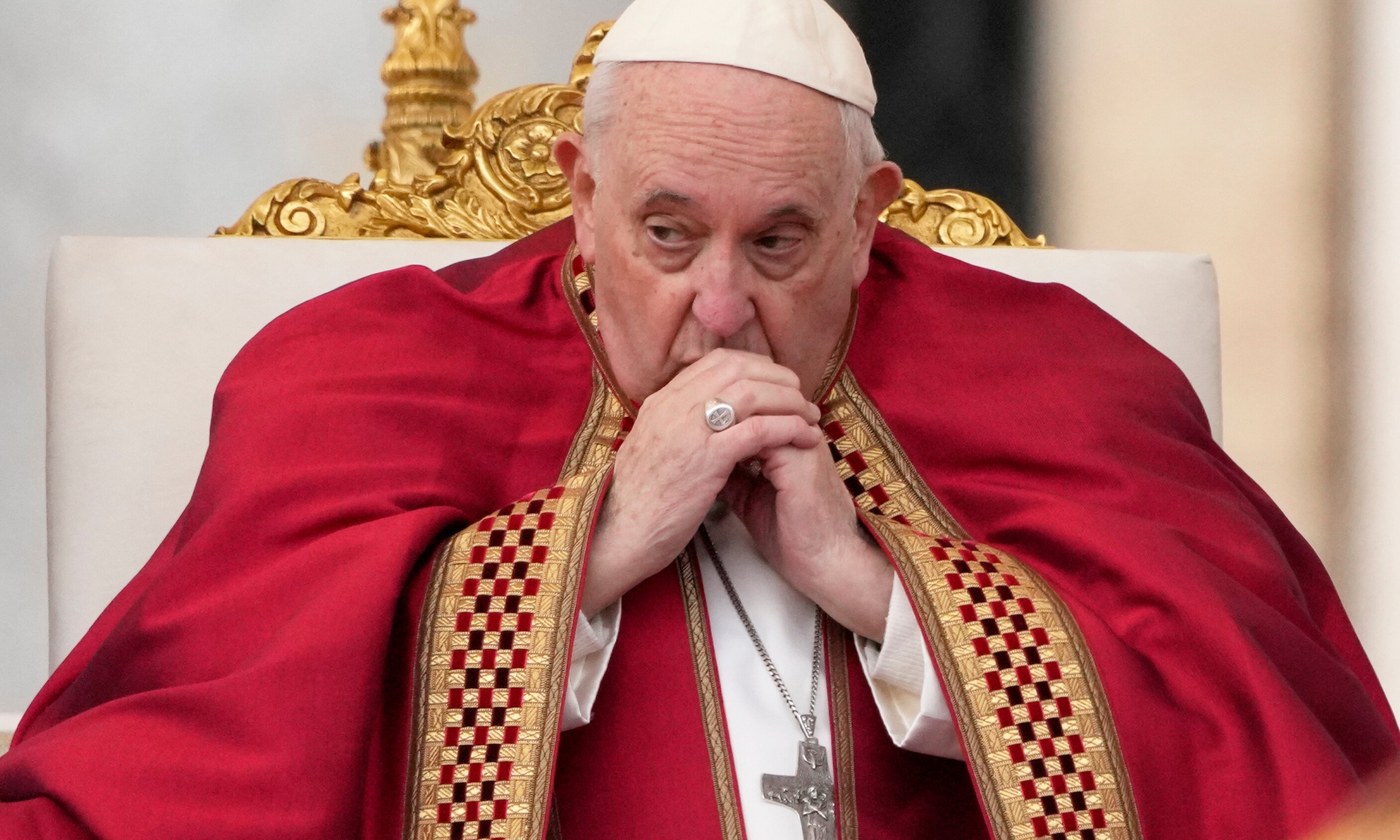
[St. Peter’s Basilica – candlelight flickering, incense thick in the air. The funeral of Pope Francis is underway. The Young Pope, Lenny Belardo, walks to the pulpit in his stark white robes, tears glistening under his eyes.]
Lenny Belardo (voice trembling): “Dear brothers and sisters in Christ… today we bury a shepherd. Pope Francis, Jorge Bergoglio, was a man of the people—an Argentinian who dared to wash feet, speak of mercy, and smile in the face of wolves.
And yet—what killed him?
[Lenny pauses, gaze sharpening.]
Was it his age? His health? Or was it the Vatican doctors, those who wear stethoscopes like serpents wear scales? I see you. I know your names. And so does God.
[He wipes a tear, voice darkening.]
There’s rot in this holy place. And it has a name: Alta Vendita. The invisible hand of the Freemasons—the ones with silk gloves and secret oaths—have riddled our Church with doubt, deception, and disdain for the poor.
But I say this now, as acting Pope:
I want peace. I want reconciliation with the lost sons of the Church. Let the blue-collar Freemasons—those who never rose beyond the 3rd degree, who laid bricks with blistered hands and prayed to Christ under their breath—come home. Come back. You are welcome.
But to the ones who climbed the ladder of degrees into the abyss of Gnosticism, Luciferian light, and Babylonian pride—go to hell.
You wear aprons of secrets and build towers of Babel in the dark. We build churches in the open. We raise crosses. You raise false gods.
[He steps back, looking heavenward.]
Pope Francis, may angels carry you beyond this corruption. And may Christ strike down every lie that walks in red shoes.