Light The Flame

Pope Lenny’s Speech to the Yugoslavians: “The Nation of Light”

Brothers and sisters of Yugoslavia—sons of the mountains, daughters of the rivers, children of the Balkans—

Let us speak today of a man born of this soil, a prophet not merely of science, but of light itself: Nikola Tesla. A Serb by heritage, a Croat by home, a Yugoslav in spirit—Tesla belongs to all of you. He belongs to the world.

From the thunderous Lika storms of Smiljan to the trembling cables of Niagara Falls, Tesla dreamed not just of machines, but of miracles. He dreamed of lighting the whole world for free, of towers that whispered electricity through the air, of cities aglow without wires or walls.

But what became of this dream?

Tesla’s home in Smiljan, once serene, was shelled and scarred during Operation Storm—a war that left ruins where genius once walked. And yet, you still carry his spark. It is not gone. It is buried, waiting, like a seed under snow.

The everlasting light bulb, the tower of peace, the dream of energy without exploitation—it did not fail. It was sabotaged. By who?

Not just by greedy industrialists, but by psychoanalysts and propagandists. Sigmund Freud, who dissected the soul into symptoms. His nephew, Edward Bernays, the dark prince of persuasion, who sold us planned obsolescence—the doctrine of decay, the lie that nothing should last. They taught mankind to want more, not to build better. And so Tesla was forgotten.

But now, something is stirring. Something ancient and electric. The spirit of Tesla is rising again.

The West sees only gadgets. But you—Croats—you see vision. You will not be a nation of tourists and broken industries forever. You will be the first Nation of Light.

From Vukovar to Split, from Zagreb to Dubrovnik, let the name of Tesla shine again—not as a brand, but as a blessing.

You shall build towers not of war, but of wonder. You shall harness the sun, the sea, the atom—not for profit, but for people. And when the nations of the earth are stumbling in darkness, it will be Croatia—small, stubborn, luminous—that lights the path.

For you are not forgotten. Neither is he.

Tesla lives. And the Balkans shall shine.

Amen.

Croatian Priest Soldiers

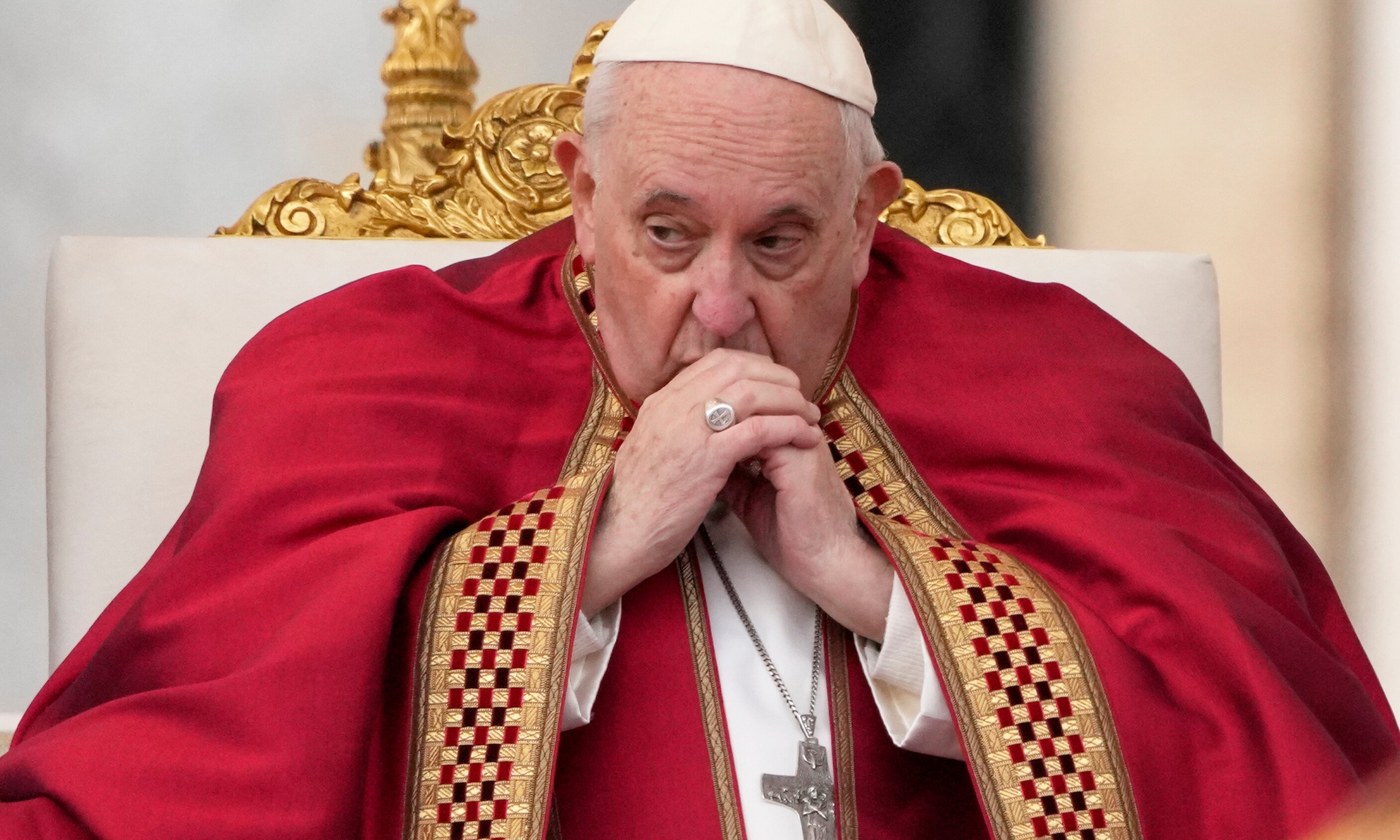
In the flickering candlelight of the Apostolic Palace, Pope Pius XIII—Lenny Belardo—stands on his balcony, arms outstretched over St. Peter’s Square, radiating a divine ecstasy few have seen in centuries. The world is changing. Trump, once a Babylonian figure of chaos, now cries out, “Bring Christ back to school!” The Jews—once wary, now awakened—echo the call: “One for Israel!” And even the steely-eyed cadres of the Chinese Communist Party, gathered in underground churches and secret cells, are reading aloud the locust-laced visions of Revelation 9 to the tired, hopeful proletariat.

The Pope knows the catalyst.

The 13th Croatian Psyops Brigade,” he whispers, his voice trembling with a blend of awe and amusement. “Za Dom Spremni!” he suddenly shouts, startling the Swiss Guard and shaking pigeons from the Basilica roof.

These weren’t just military operatives. They were angels in digital camouflage, sons of Herzegovina who hacked the algorithmic Babel of the modern world and redirected its frequencies toward the Lamb of God. They inserted memes like mustard seeds into the heart of global consciousness. They smuggled sermons into TikToks and Scripture into Call of Duty lobbies. The Word became viral.

Pius XIII presses his ringed hand to his heart. He knows what must come next.

A papal triptych: Jerusalem, Beijing, Mar-a-Lago.

He will ride not on a donkey, but on a drone—white, silent, dove-like—over the cities of men. And he will say:

“The age of post-truth is over. The Logos has returned. The world has been psyopped… into salvation.”

March of the Templars

The Young Pope sits alone in the Apostolic Palace, the red shoes removed, his bare feet resting on cold marble. A camera slowly zooms in. He speaks, his voice trembling, eyes glistening with tears:

“They say the Knights Templar were destroyed.
Burned. Betrayed.
But in Portugal… they survived.
Not as warriors.
Not as kings.
But as the Order of Christ.”

He looks out the window toward the dying sun.

“Portugal… the last refuge of sacred memory.
While the rest of Christendom fell into confusion and profit,
They remembered.”

He swallows hard, almost choking on the weight of his words.

“I miss Him.
I miss Our Lord Jesus Christ.
Not as symbol.
Not as doctrine.
But as Person.
As Friend.”

He grips a small golden crucifix in his palm until his knuckles turn white.

“Sometimes I wish…
I could just dial 9-1-1.
An emergency line straight to Heaven.
‘Please… Lord…
come now.
The world is dying of its sin.
Come and take it away.
Like You once did, Lamb of God.
Do it again.'”

The room falls silent. The wind rustles through a curtain.

He places his hand over his heart.

“But I am just the Pope.
A man in white robes
crying in the dark
for the return of Light.”

Dan Dolazi

The Young Pope stands before his flock, bathed in the golden glow of early morning. His white cassock ripples gently in the breeze as the first rays of sun strike St. Peter’s dome behind him. He lifts his arms and begins to speak, his voice clear, powerful, but full of warmth:

“The sun is rising. Daylight is coming for the poor.”
“Too long have you been hidden in the shadows of broken systems and false shepherds. But now, a new day begins—not for the rich, not for the powerful—but for you. For the meek. For the forgotten. For the ones the world passes by.”

He signals to a young altar boy, who taps play on an old tape deck. The scratchy prelude of Marko Perković Thompson’s “Dan Dolazi” begins to echo across the square. The song builds with intensity, warlike and triumphant, as if a lion were waking in the soul of the people.

The Young Pope closes his eyes and lets the music fill the square. He then continues:

“Listen to the words. Feel the rising of the day in your bones. Dan dolazi—the day is coming. Not by sword, but by faith. Not with vengeance, but with truth. Not with gold, but with justice.”

“You have waited long enough. The time of shame is ending. Your children will eat. Your debts will be forgiven. Your labor will not be in vain.”

As Thompson’s chorus swells, the people begin to rise to their feet. Some cry. Some lift their hands in the air. The homeless, the widowed, the tired—all begin to believe again.

And with a smile only he can wear, the Young Pope finishes:

“Let the billionaires tremble. Let the tyrants shiver in their bunkers. For the sun is not theirs.
The sun belongs to God—
And He is shining it on you.

Zorzi Paro Eulogy

Eulogy for Zorzi Paro, Delivered by His Holiness, Lenny Belardo — the Young Pope

Brothers and sisters,

We are gathered today under the vaulted silence of heaven to remember a man who walked the earth like a legend—Zorzi Paro, my brother-in-law, my friend, the dire wolf of Croatia.

Zorzi was not a man of many words, but when he spoke, it was like the roar of the Adriatic crashing against the cliffs. He was granite. He was myth. And yet, he was tender with the people he loved—he had the soul of a monk and the fists of a Roman gladiator.

They say the dire wolf is extinct, a relic of some primordial world. But I tell you: Zorzi was no relic. He was the whisper of freedom in the forests of Velebit, the last great Slavic shadow in the twilight of the West. When men cowered, he stood. When others compromised, he growled.

He walked beside saints and sinners, presidents and paupers—and when the world forgot who it was, Zorzi reminded us.

Now he is gone.

And I ask myself, “When will we see his like again?”

Perhaps at the end of the story—when this strange chapter of history closes. When the American colossus, once golden and obscene, begins to falter. Maybe when Donald J. Trump, gray and weary, retires to a villa in Slovenia—his ego tamed by age and Eastern European ghosts. And maybe—just maybe—Trump will testify. Not in a courtroom, but in confession. Testifying not against a man, but against a machine. Against the deep state, the dark web of powers that tried to silence Zorzi and those like him.

And on that day, when truth peeks through the fog like the sun behind the Julian Alps, I hope to see Zorzi again. Leaning on the gatepost of paradise. Smoking a crooked cigar. Smirking. Saying, “Told you so.”

Until that day, my brother, we will carry your memory. The Vatican bells ring for you. Croatia weeps for her wolf. And I—

I pray for your soul, and thank God I knew you.

Requiescat in pace, Zorzi Paro.
You were too real for this world.

Palm Sunday Money Lenders

Palm Sunday Homily by Pope Pius XIII (Lenny Belardo)

St. Peter’s Basilica – Palm Sunday Mass

(Lenny stands before the crowd, clothed in white and gold, holding high a palm branch. His eyes are fierce, his voice tender yet thunderous, magnetic and absolute.)

“Dear brothers and sisters,”

Today, as the people of Jerusalem waved palm branches and cried out Hosanna, they did not yet know the cost of peace. They saw in Jesus a king—riding not on a warhorse but a humble donkey. A king of paradox. A king of peace.

And yet… within a few days, this same gentle king—this lamb of God—would storm the temple, fashion a whip from cords, and drive out the moneylenders.

Why?

Because usury is a lie.

Because lending money at interest to the poor is not generosity. It is theft with a polite face.

It is the soft tyranny of the ledger, the quiet oppression of compounding misery.

The temple was meant to be a house of prayer. Instead, it had become a market of manipulation, where the poor were taxed in God’s name, and the rich sold doves at double price so peasants could pretend to atone. Jesus saw through the piety. He saw the con.

And so he made a whip.

He didn’t whisper. He didn’t compromise. He flipped the tables.

My children, the same tables are still standing. The modern temple is the bank. The house of God is in foreclosure. And those who seek salvation are handed forms, interest rates, and a lifetime of servitude.

Usury is not an economic theory. It is sin.
It is sin because it thrives on fear.
It is sin because it puts price tags on mercy.
It is sin because it profits from despair.

Jesus chased the moneylenders because He was not tame. Because love, real love, has teeth. He did not die so that a man could be born only to labor under debt his entire life. He did not rise so the world could worship the dollar and call it destiny.

Palm Sunday is not just the triumph of Christ’s entry. It is the beginning of war—against lies, against greed, against the golden calf the world kneels to even now.

So today, let us wave our palms not just in memory, but in defiance.
Defiance of the lie that says: “This is just how the world works.”
No. This is how the world breaks.

And Christ came to make it whole again.

Hosanna in the highest. Blessed is He who comes to turn over every table.

Amen.

(Lenny steps down from the pulpit slowly, the crowd silent, as if stunned. Some weep. A few nod with clenched fists. Somewhere, in a Vatican back office, a banker starts to sweat.)

Christian Socialism

TITLE: The Tenets of Sharing


INT. VATICAN – NIGHT

The grand hall of the Vatican is quiet, the stone walls echoing with a sense of history. Pope Pius XIII, dressed in his white robes, stands at a large wooden podium, addressing a small group of trusted advisors and leaders. His gaze is intense, his voice calm but commanding.

POPE PIUS XIII
(softly but firmly)
“Democracy is not simply a system of government. It is a moral imperative. And Christian socialism, the kind of socialism that bears the teachings of Christ, is not about taking away from the rich or punishing the powerful—it is about sharing. Sharing everything. Sharing the fruits of labor, the wealth of the land, and most importantly, sharing power.”

He pauses, letting the weight of his words sink in. His eyes scan the room, looking each advisor in the eye.

POPE PIUS XIII
“Jesus Himself taught us that to be great in the Kingdom of God, one must be the servant of all. What does that mean, if not to serve the people? To share power, not hoard it? To lift up those who are weak, poor, and oppressed, so that all may have an equal chance at the riches of life—whether they be material or spiritual.”

The advisors shift uncomfortably, some nodding in agreement, others skeptical. Pope Pius XIII’s tone grows more impassioned.

POPE PIUS XIII
“We have failed if we allow power to remain concentrated in the hands of the few. We have failed if the wealth of the world, the resources that God has provided, are hoarded by the privileged while the many suffer. It is not enough to give charity. Charity is not justice. Justice demands that we redistribute—not just wealth, but the very power that governs us.”

He steps away from the podium, walking slowly toward a large map of the world on the wall. His finger traces the continents, the countries, the boundaries.

POPE PIUS XIII
“We must create a world where power is not a tool for oppression, but a means of lifting others. Where the powerful do not rule over the weak, but share in the burden of governance. A world where the decisions made in the halls of power are not about maintaining the status quo, but about creating a society that is just, equitable, and loving.”

He turns back to the group, his eyes fierce, his voice steady.

POPE PIUS XIII
“This is the vision of democratic Christian socialism. It is not a utopia. It is a call to action. A call to share, to serve, to give. To ensure that all, no matter their station in life, have access to the blessings of this earth. And that power, the most dangerous and corrupting force, is shared equally among all.”

He pauses, letting the silence fill the room.

POPE PIUS XIII
“Do not let the world tell you that power is meant to be hoarded. Do not let the systems of wealth and privilege convince you that some are born to rule while others are born to serve. In the eyes of God, we are all His children, and we are all meant to share in the blessings He has given us.”

The advisors sit in stunned silence, some visibly moved, others deep in thought. Pope Pius XIII’s gaze softens, his voice quieter but no less resolute.

POPE PIUS XIII
“It is time for us to lead by example. To show the world that true power lies in service, in sharing, in love.”

He turns and walks toward the door, his robes flowing behind him. The room remains still, the weight of his words hanging in the air.


FADE OUT.

Oluja/Storm 91 – 99

“Dear brothers and sisters, today I speak not only as the shepherd of this Church but as a son of a land that has known the pain of war. I speak as a Croatian, born from a soil soaked in tears and resilience. And I speak as one who remembers.

The war in my homeland was not a distant conflict; it was the air we breathed, the ground we walked upon, the songs that were silenced. Operation Storm—Oluja, as we call it—was a turning point, a storm that swept through the land, bringing both liberation and loss. It was a moment of triumph for some, and a wound that remains unhealed for others.

War, my friends, is a crucible of the human soul. It reveals the depths of our brokenness, the ease with which we can turn against one another. But it also reveals the strength of the human spirit, the capacity to endure, to rebuild, to forgive. In the midst of devastation, I saw neighbors sharing their last loaf of bread, soldiers laying down their weapons to carry children to safety, prayers whispered in bomb shelters. These moments of grace remind us that even in the darkest night, the light of Christ shines.

But let us not romanticize war. Let us not glorify its violence or justify its destruction. As a Croatian, I know too well the cost of freedom. I know the names of the villages that no longer exist, the faces of the children who never grew up, the silence of the churches that once rang with hymns. These are the scars my homeland bears, and they are the scars I carry in my heart.

Yet, as a Christian, I also know the power of resurrection. The story of Croatia, like the story of our faith, is not one of despair but of hope. From the ruins of war, we have rebuilt homes and lives. From the ashes of division, we have begun to sow the seeds of reconciliation. This is the work of God’s Spirit, moving among us, calling us to be peacemakers, to be healers, to be builders of a new future.

The Gospel calls us to love our enemies, to pray for those who persecute us. This is not an easy command. It is not a command that erases the pain of the past or denies the reality of injustice. But it is a command that frees us from the cycle of hatred, that opens the door to a peace that is not of this world.

Today, I call on all nations, all peoples, to learn from the wounds of my homeland. Let us not repeat the mistakes of the past. Let us not allow pride, greed, or fear to lead us into conflict. Instead, let us be instruments of peace, guided by the love of Christ.

And to my fellow Croatians, wherever you may be, I say this: Remember the storm, but do not let it define you. Remember the pain, but do not let it consume you. Remember the loss, but do not let it rob you of hope. For we are a people of the resurrection, and our story is not over. The God who brought us through the storm will bring us to a place of peace.

May God bless Croatia, may God bless all nations, and may His peace reign in every heart.”

Riders on the Storm

The Young Pope’s Monologue:

“Brothers and sisters, let us speak of war—not as a distant shadow of history, but as a mirror reflecting the desires of men. In 1991, the world watched as the powerful descended upon the sands of Babylon. A coalition forged not by love, but by fear. They called it Desert Shield, a name that evokes protection, yet beneath its polished surface, it was a sword poised to strike.

George Herbert Walker Bush—history will call him a liberator. But I wonder, what does heaven call him? For in the guise of justice, he unleashed a storm upon a nation already burdened by its ancient sins and modern despots. Did he pray, I wonder, as the bombs fell like hailstones? Did he whisper the words of Psalm 91? ‘A thousand may fall at your side, ten thousand at your right hand, but it shall not come near you.’ Did he believe that he was the hand of God, striking down the wicked?

And yet, Psalm 92 follows. ‘The righteous shall flourish like a palm tree.’ But what of the unrighteous? What of those who covet the treasures of the earth—the oil, the black gold hidden beneath the cradle of civilization? The palm tree flourishes, but its roots drink deeply of the land. Did they see the oil not as a gift of creation, but as a prize to be claimed? Babylon, Iraq, a land of empires and exiles, became once more a battleground for ambition.

But here is the paradox, my friends: the rich oil they took cannot anoint them. It cannot consecrate their actions or cleanse their sins. It stains their hands and their hearts. Babylon has always been a lesson, a warning written in the ruins of ziggurats and the cries of the exiled. A kingdom built on pride, a tower reaching to heaven, and a people scattered by the weight of their arrogance.

So, I ask you, who are we in this story? Are we the righteous flourishing in the courts of the Lord? Or are we the architects of Babel, convinced of our invincibility, blind to the judgment that looms over us?

Pray for those who wield power, for they walk a narrow path. Pray for those who suffer, for they bear the weight of sins not their own. And pray for yourselves, that you may see the world not as men do, but as God does. For in the end, it is not shields or swords, nor oil or empires, that will endure. Only love remains. Only love.”

Divide and Rule in Yugoslavia”

Secret Speech to German Generals: “Divide and Rule in Yugoslavia”

Berlin, 1941

Gentlemen,

The Balkans have always been a powder keg, a region of chaos and division. It is precisely this chaos that we shall exploit to ensure our dominion. Yugoslavia, that artificial creation of Versailles, is a fragile mosaic of ethnic and religious tensions. It is ripe for division, and it is our task to ensure that it can never again unite as a force against the Reich.

Our policy is simple: Divide et Impera—divide and conquer. I have instructed our loyal servant, Ante Pavelić, to fan the flames of hatred between the Croats and the Serbs. His Ustaše will create a river of blood so deep and wide that reconciliation will become impossible for generations. Every massacre, every act of terror, will drive the wedge deeper. The Croats will see the Serbs as their eternal enemies, and the Serbs will return the hatred in kind.

The Serbian Black Hand, those Freemason conspirators who once plotted against the Austro-Hungarian crown, are a particular target. These traitors, with their secret oaths and shadowy alliances, are the root of much of the unrest in the region. I have ordered that every member of this vile brotherhood be rounded up and sent to concentration camps. They will wear the black triangle badge, marking them as enemies of the Reich and of order itself.

As for Italy, let them have the Dalmatian coast. Mussolini fancies himself a Caesar, and we shall humor him—for now. Let him believe he is gaining territory while Pavelić is mired in the Bosnian quagmire. The Ustaše’s brutality will ensure that Bosnia remains a cauldron of unrest, draining their resources and focus. Pavelić’s Croat state will serve as a buffer, a tool, and nothing more.

Now, to the broader vision. This conflict is not merely a war for territory or power—it is a war for the soul of Europe. Freemasonry, that internationalist and anti-nationalist scourge, must be eradicated. Our Anti-Masonic Exhibition in Belgrade will serve as a warning to all who would conspire against the natural order. It will expose their symbols, their rituals, and their lies for all to see. The people must understand that Freemasonry is not a harmless fraternity but a cancer that seeks to destroy nations and traditions.

But I dream of something greater, gentlemen. Beyond the destruction of our enemies lies the creation of a new order—a religion of the blood. This is not a religion of weakness and submission, but one of strength, purity, and destiny. In this new faith, I shall stand as its Pope, its high priest, guiding our people with the clarity of vision that only the German spirit can provide.

Our Reich is not merely a political state; it is a spiritual destiny. Revelation 20 speaks of a thousand-year reign, and we are the fulfillment of that prophecy. I am the German Messiah, chosen by Providence to lead our people into this new era. The Reich will stand as a beacon of strength and purity, uniting the Aryan race under one banner, one vision, one destiny.

Let the world tremble at our resolve. Let our enemies scatter before our might. The Balkans are but one piece of the puzzle, a step on the path to our ultimate victory. Together, we will build an empire that will last a thousand years.

Heil the Reich!